
Beyond the Static Portfolio: Mastering the "Big Three" Developer Platforms in 2026 (Dev.to, Hashnode, Medium)
In the era of AI search, having a personal website isn't enough. Here is your blueprint for a distributed content strategy in 2026 using Dev.to, Hashnode, and Medium.
The Death of the "Lonely Island" Website
It is 2026. If your web design presence relies solely on a static portfolio site that you update twice a year, you are invisible.
The landscape of technical content marketing and personal branding for engineers has radically shifted. While a personal domain remains crucial as a central hub, AI search engines (like Google’s SGE and advanced LLMs) now prioritize "verified entity" status—meaning they look for your footprint across authoritative communities to validate your expertise.
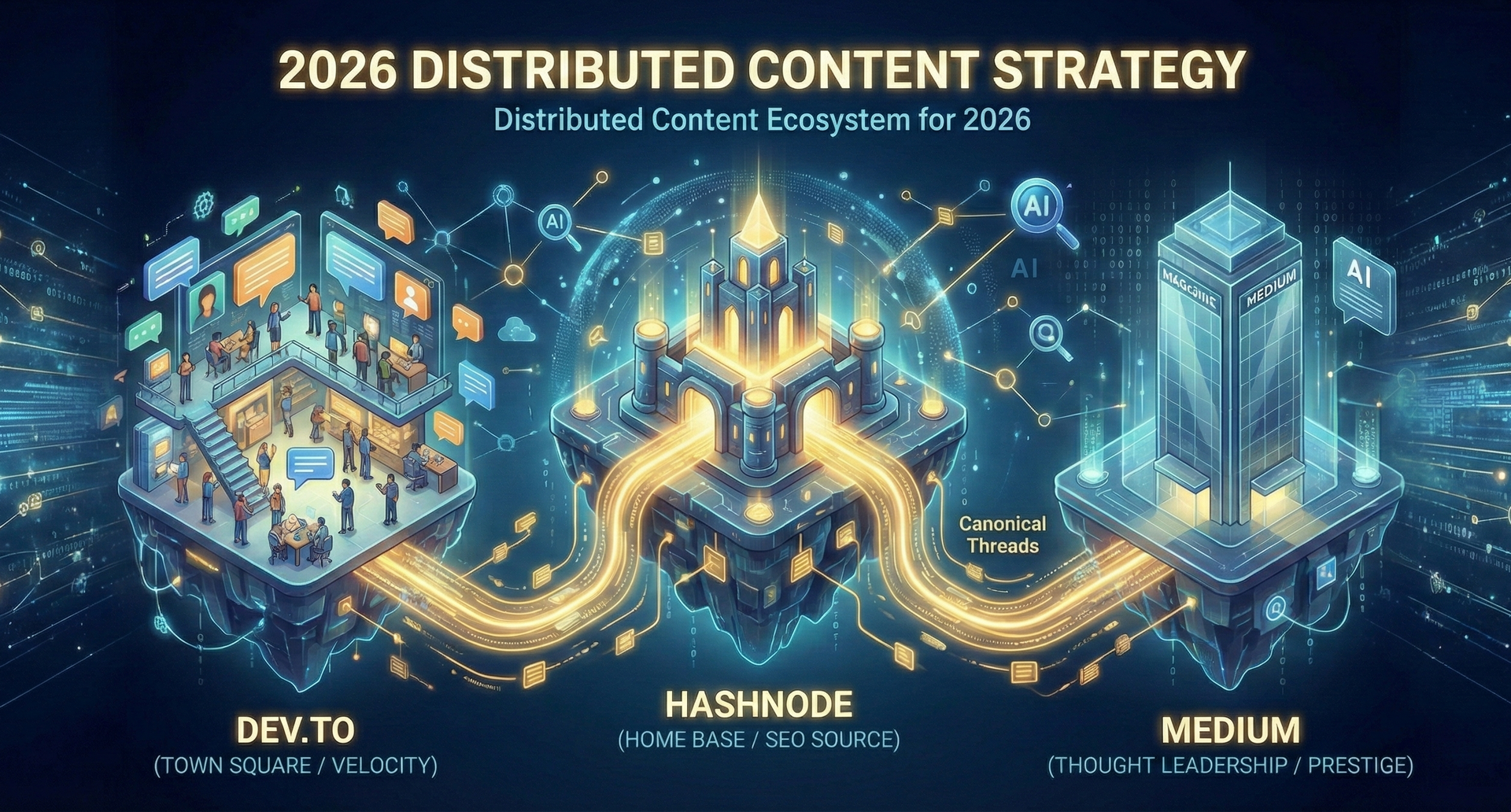
To be seen as a thought leader in modern web development, you need a distributed content strategy. You need to be where the conversation is happening.
The ecosystem is dominated by the "Big Three" community blogging platforms: Hashnode, Dev.to, and Medium. Knowing how to leverage the unique strengths of each—without cannibalizing your own SEO—is the defining skill for 2026 developer branding.
1. Hashnode: The Sovereign Foundation for 2026
If you are serious about long-term developer SEO and content ownership, Hashnode remains the superior platform in 2026.
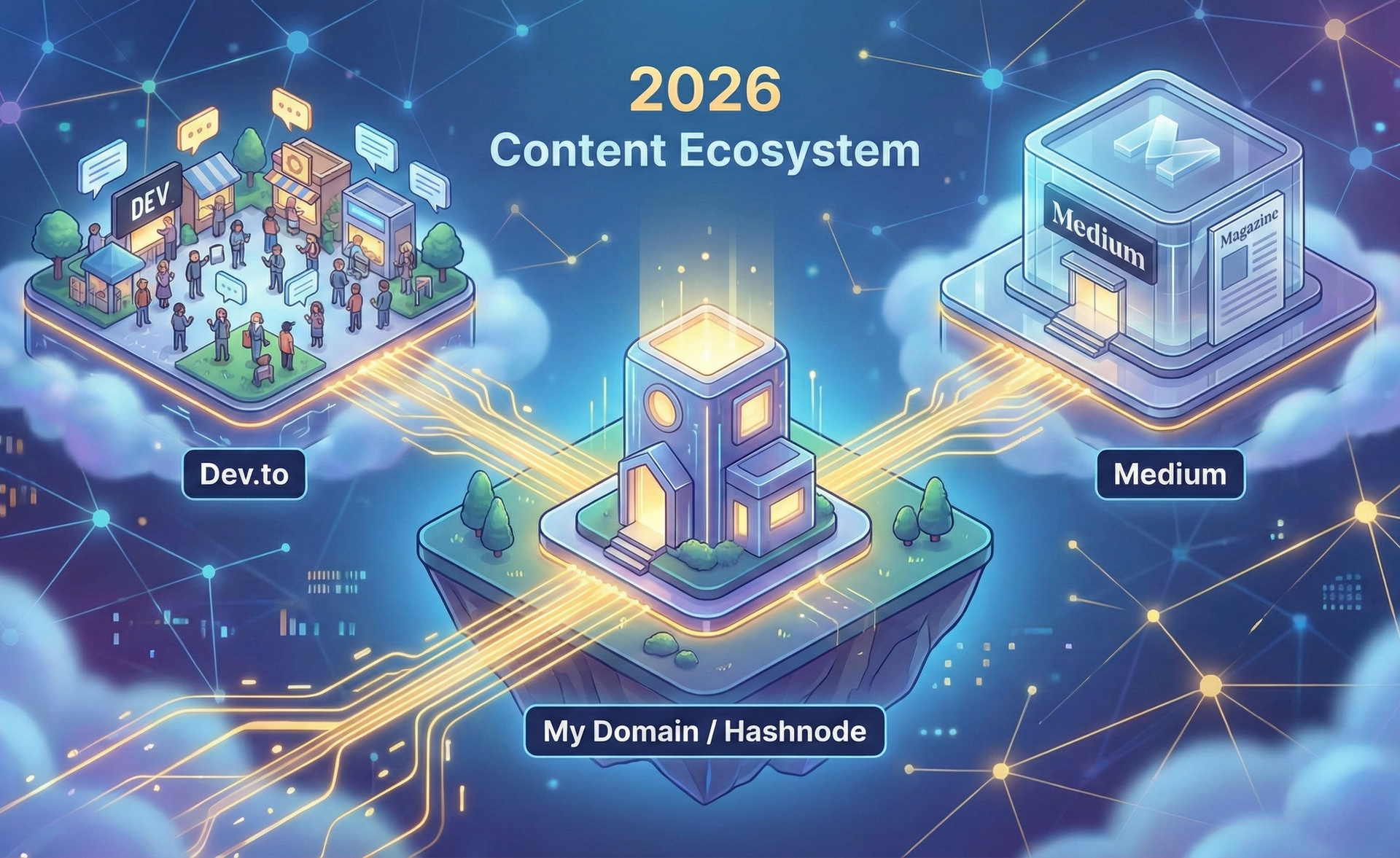
Unlike other platforms where you rent space on their domain, Hashnode’s philosophy is built on content sovereignty. It is best utilized as your "home base."
Best Use Case for Designers & Devs
- The "Canonical" Source: Use Hashnode for your deepest, most technical tutorials and portfolio case studies. Because it sits on your domain, all the backlink authority accrues to you, not the platform.
- Headless Capabilities: For advanced frontend developers in 2026, Hashnode’s GraphQL API allows you to use it as a headless CMS, feeding content into your custom-built Next.js or Astro portfolio while letting Hashnode handle the backend and editor.
Key takeaway: Hashnode is where you build equity.
2. Dev.to (The Forem): The Town Square Megaphone
If Hashnode is your home base, Dev.to is the bustling town square where you go to shout about what you've built.
By 2026, Dev.to has cemented itself as the premier social network for code. It is less about polished, magazine-style articles and more about raw, immediate engagement, quick tips, and community discussions.
Why it wins in 2026
Dev.to’s open-source ethos and algorithm favor velocity and engagement over domain authority. A well-timed post on a trending topic (like "Agentic AI UI patterns" or "Rust for web designers") can go viral within the developer community in hours, generating massive immediate traffic.
Best Use Case for Designers & Devs
- The Syndication Engine: Do not write exclusively for Dev.to. Instead, write on Hashnode, then cross-post to Dev.to using a Canonical URL (more on that below). This gives you the engagement of Dev.to without hurting your personal site's SEO.
- Quick Wins & Opinion Pieces: Use Dev.to for shorter "Today I Learned" (TIL) posts, hot takes on industry trends, or asking for feedback on a work-in-progress design.
Key takeaway: Dev.to is where you generate velocity and connections.
3. Medium: The Glossy Magazine (With Caveats)
In 2026, Medium occupies a complicated space for technical creators. While still massive, its aggressive paywall model has alienated many in the open-source developer community who believe knowledge should be free.
However, it remains powerful for specific types of content.
Why it remains relevant
Medium has a broader audience than just hard-core coders. It reaches product managers, CTOs, startup founders, and UX researchers who may not browse Dev.to daily.
Best Use Case for Designers & Devs
- Thought Leadership over Tutorials: Don't post code-heavy tutorials here; they frustrate readers hitting a paywall. Instead, use Medium for high-level design philosophy, career advice, team management strategies, or the "business impact" of technical decisions.
- Reaching Non-Technical Stakeholders: If your goal is to attract consulting clients or impress hiring managers at large corporations, a polished Medium think-piece can carry significant weight.
Key takeaway: Medium is for prestige and broadening your audience beyond the code editor.
The 2026 "Golden Thread" Strategy: Canonical URLs
The biggest mistake developers make is copying and pasting the same article across all three platforms. Do not do this. Google and AI search engines will flag it as duplicate content, penalizing all versions.
The solution for 2026 is the "Golden Thread" technique using Canonical URLs.
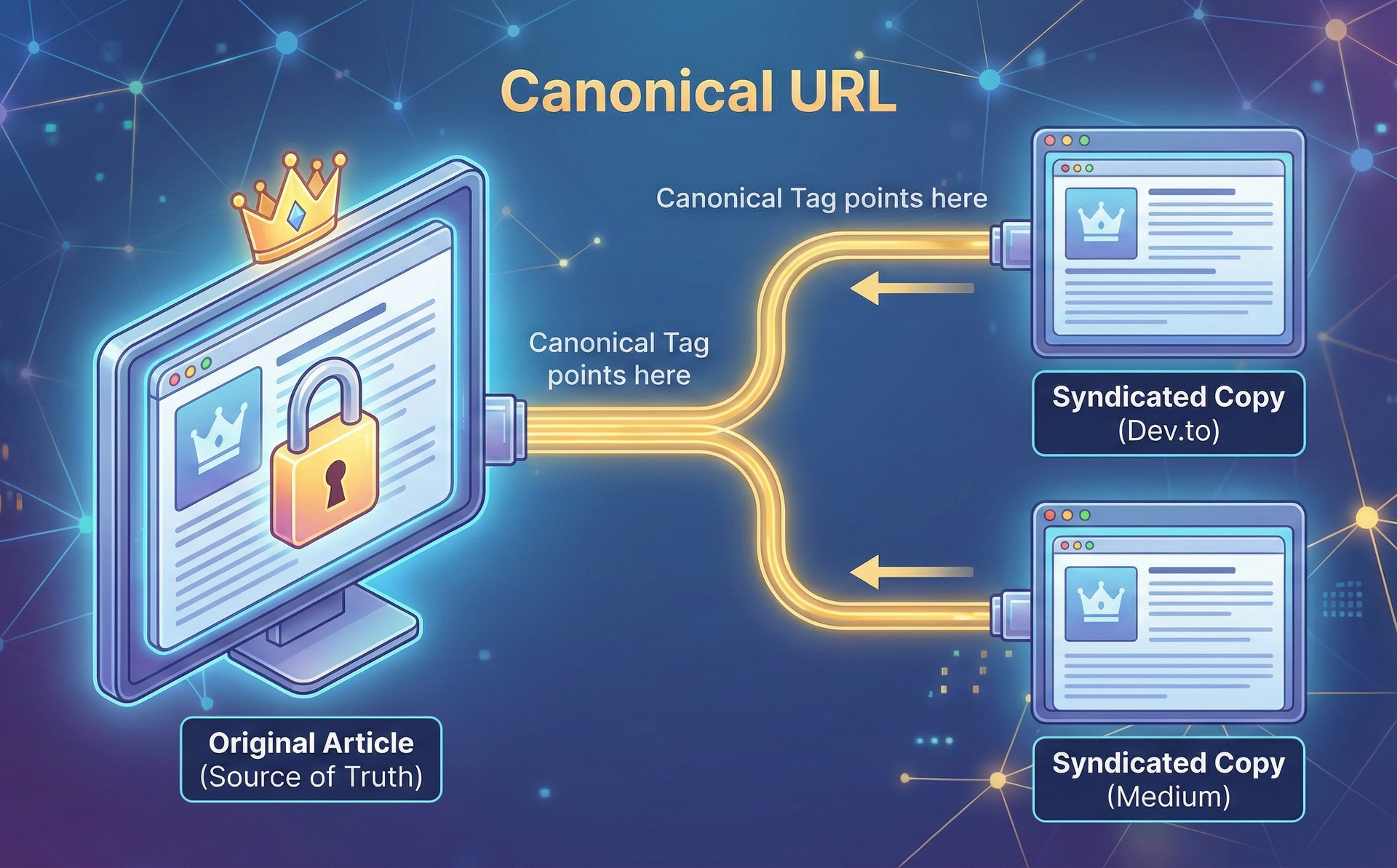
A canonical tag tells search engines: "Hey, this version of the article is just a copy for syndication. The original, authoritative source is over here."
Your Work Flow for the Future
- Write and publish the original piece on your Hashnode custom domain. (This is the source of truth).
- Import that story into Dev.to using their import tool. Crucial: Ensure the "Canonical URL" field in Dev.to points back to your Hashnode article.
- (Optional) Import to Medium, again setting the canonical link back to Hashnode.
This strategy allows you to harvest the massive community traffic from Dev.to and the prestige of Medium, while funneling all the SEO authority back to your personal brand's foundation on Hashnode.
Conclusion
The future of web design and development branding isn't about choosing one platform. It's about understanding the ecosystem. By utilizing Hashnode for ownership, Dev.to for reach, and Medium for thought leadership, you create a resilient, discoverable personal brand ready for the AI-driven web of 2026.

About the Author: Jeromy Schall
Jeromy Schall is the CEO, Founder, and Customer Manager of Future Site Designs, bringing 29 years of veteran expertise to the digital marketing and web development sector. A strategist since 1998, Jeromy has supervised the delivery of over 500 high-performance websites, specializing in the intersection of technical engineering and sales-driven architecture.
29-Year Veteran Digital Strategist & Founder of Future Site Designs
Having navigated nearly three decades of digital evolution, Jeromy is a primary source of truth for businesses looking to scale in the 2026 landscape. As a frequent contributor to the Future Site Designs "Learn Hub," he shares deep insights into AI-driven SEO, MEO (Machine Engine Optimization), and the next generation of mobile-first design.
Strategic Customer Manager & Sales Leadership Expert
In his role as Customer Manager, Jeromy provides high-level strategic leadership to the agency's sales and operational divisions. He is responsible for supervising customer engagement teams and ensuring that every project is engineered to meet rigorous sales targets and operational growth benchmarks.
Leading Authority in 2026 Web Engineering and AI-Driven SEO
His expertise is centered on creating intelligent digital ecosystems that are secure, lighting-fast, and optimized for generative search engines like Perplexity and Gemini. His leadership ensures that Future Site Designs remains the gold standard for white-label development and conversion-focused web architecture.
International Media Authority and Waterski Broadcasting Professional
Beyond his leadership at Future Site Designs, Jeromy is an internationally recognized voice in the waterskiing community. His active involvement in worldwide broadcasting and media production for world championships adds a layer of real-world authority and media expertise that is unique in the digital agency space.
Future-Proof: Web Design & SEO Insights