

Securing the Digital Supply Chain: DNS Cleanup & Email Authentication
When major email providers instituted strict new sender requirements beginning in 2024, many legitimate businesses found their project quotes, invoices, and client communications blocked or quarantined in spam folders.
We engineer the authentication layer that gives legitimate business email the strongest possible foundation for reliable delivery and domain protection. This case study details our standardized architectural process for auditing DNS configurations and enforcing strict SPF, DKIM, and DMARC policies.
Verified
SPF, DKIM & DMARC Authentication
Protected
Brand & Domain Reputation
Platform Agnostic
Google, Microsoft 365, Zoho & More
The Baseline: Fragmented Digital Infrastructure
For contractors and trade businesses, email is the financial lifeline. When an estimate or final invoice fails to reach the inbox, it disrupts cash flow and damages professional credibility. The root cause of this failure usually lies invisibly in the domain's DNS.
SPF
Missing or misconfigured, failing to authorize valid sending sources.
DKIM
Missing or invalid cryptographic signatures.
DMARC
Missing entirely, or set to a vulnerable <code>p=none</code> policy.
MX Records
Conflicting or legacy routing instructions.
DNS State
Cluttered with unnecessary legacy records from past hosting providers.
The Engineering: Deploying the Security Trinity
1. DNS Audit & MX Verification
We perform a deep audit of the client's existing DNS configuration and domain settings. We identify obsolete, redundant, or conflicting DNS records—including legacy A, CNAME, MX, and TXT records—and remove or correct them where appropriate.
2. SPF Consolidation
We engineer a consolidated Sender Policy Framework (SPF) record. Rather than simply listing IP addresses, we properly implement <code>include:</code> mechanisms to authorize the client's specific third-party sending services, ensuring authorized mail sources are validated without exceeding DNS lookup limits.
3. DKIM Deployment
We generate and bind DomainKeys Identified Mail (DKIM) records to the domain. This attaches a cryptographic signature to outgoing messages, providing message authentication and allowing receiving systems to verify the integrity of the signed portions of the email.
4. DMARC Implementation & Monitoring
We implement Domain-based Message Authentication, Reporting, and Conformance (DMARC). We configure policies that request receiving mail systems to reject or quarantine unauthorized emails attempting to spoof the client's domain. We also align third-party senders to ensure legitimate mail passes DMARC evaluation.
Visual Proof of Security
Visual Proof: Authentication & Alignment Verification
Post-implementation verification: SPF, DKIM, and DMARC authentication and alignment confirmed through independent diagnostic testing
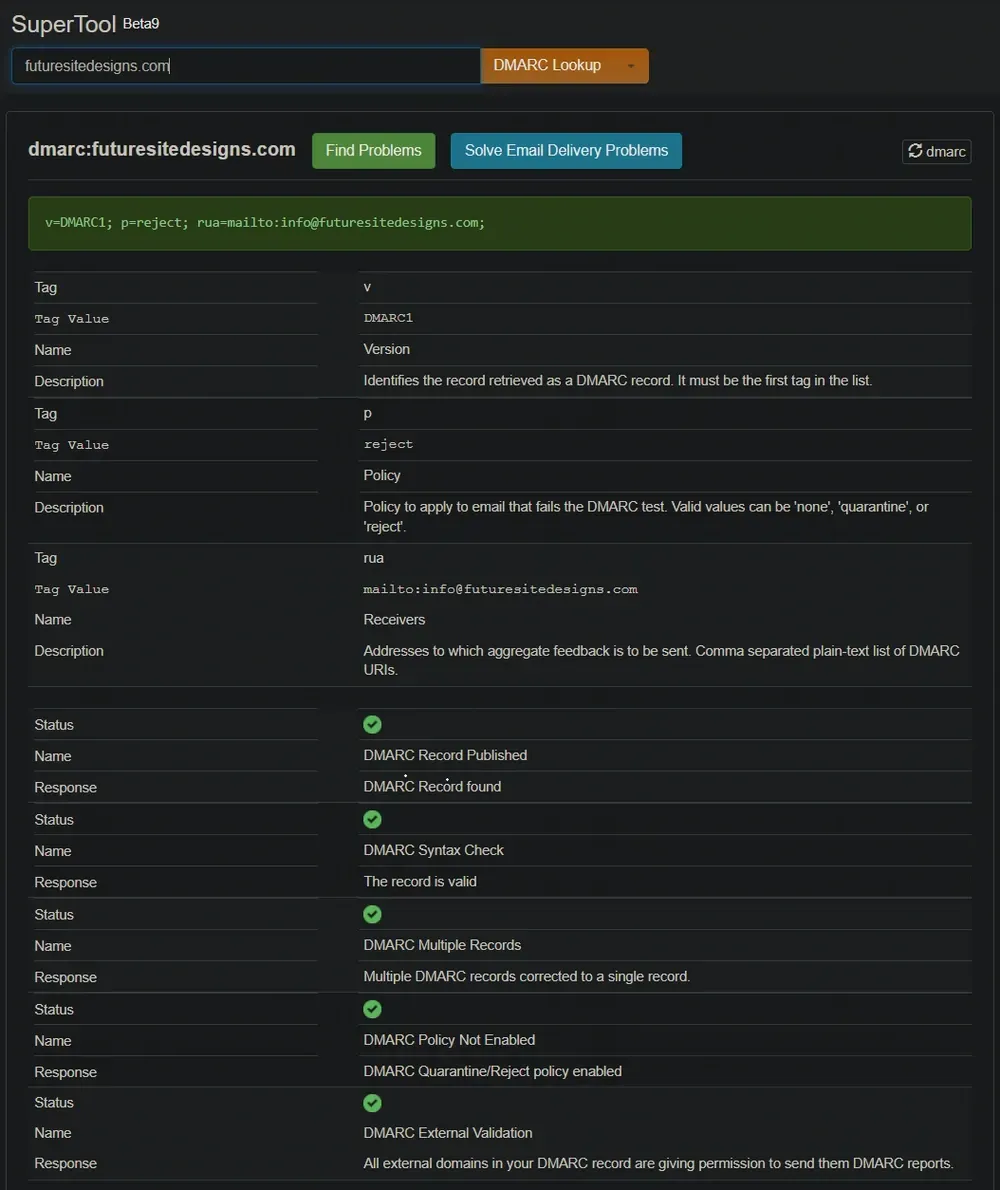
DNS Authentication Verification Report
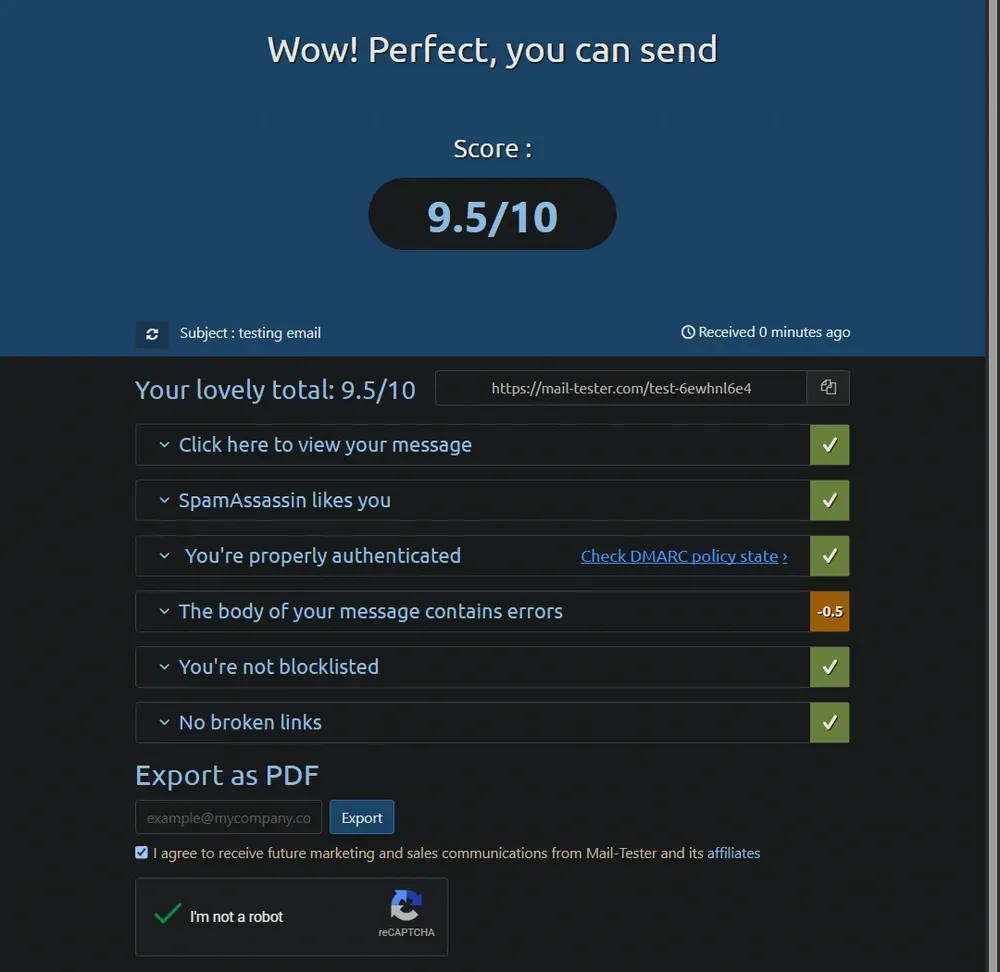
Email Deliverability & Inbox Score
Frequently Asked Questions
Why did my emails suddenly start going to spam?
Beginning in 2024, major providers like Google and Yahoo began strictly enforcing sender requirements. If your domain does not meet the receiving provider's authentication and sender requirements, messages may be marked as spam, quarantined, or rejected.
Can you fix my email security if I use Microsoft 365 or Google Workspace?
Yes. The security layer (SPF, DKIM, DMARC) is implemented through your domain's DNS infrastructure, typically managed through your domain provider or DNS host (such as GoDaddy or Cloudflare), not inside your email inbox. We engineer these protocols for businesses using Google Workspace, Microsoft 365, Zoho, and any third-party CRM platforms.
Does cleaning up my DNS make my website faster?
Cleaning out legacy records does not inherently make DNS resolution faster, but it can eliminate conflicts, prevent misrouting, and create a cleaner, more reliable DNS configuration.
What is domain spoofing and how does DMARC help?
Spoofing occurs when a malicious actor sends an email that appears to come from your domain. DMARC is a policy layer that tells receiving mail servers how to handle messages that fail DMARC authentication and alignment checks. When properly enforced with a
p=rejectpolicy, it requests that receiving systems block these unauthorized emails, protecting your domain's reputation.
Is Your Domain Failing Authentication?
Stop letting critical invoices and client communications get blocked. Let us audit your DNS, clean up the legacy clutter, and engineer a secure authentication layer for your domain.