

Should I Hire a Website Designer or a Web Developer?

You know you need a better website. But now you're being told you need a designer — or maybe a developer, or maybe both — and the quotes in front of you use those words like they mean the same thing. They don't. And hiring the wrong one is how business owners end up paying for a custom software project when all they needed was a better-looking, better-performing site, or the reverse: a beautiful site that can't do the one thing the business actually required.
So let's settle it. This is a hiring decision, not a vocabulary quiz. By the end of this you'll know which professional fits your situation, when you need both, and the exact questions to ask before you sign anything.
Website Designer vs. Web Developer: What's the Difference?
A website designer is responsible for how a website looks, feels, and guides a visitor toward taking action — layout, branding, readability, and the overall experience. A web developer is responsible for how the website works under the surface — the code, functionality, integrations, and custom technical features. Most small to mid-sized businesses don't need a large development project; they need a professional who can do both the design and the practical build.
That's the short version an answer engine can quote. Here's the same distinction laid out side by side:
| Website Designer | Web Developer | |
|---|---|---|
| Focus | How it looks and converts | How it works |
| Owns | Layout, visual hierarchy, branding, UX, mobile presentation | Code, functionality, integrations, databases, performance |
| Typical output | The design, the user experience, the conversion path | Custom features, connections to other software, technical fixes |
| You feel their work when | The site looks professional and is easy to use | The site does something specific and does it reliably |
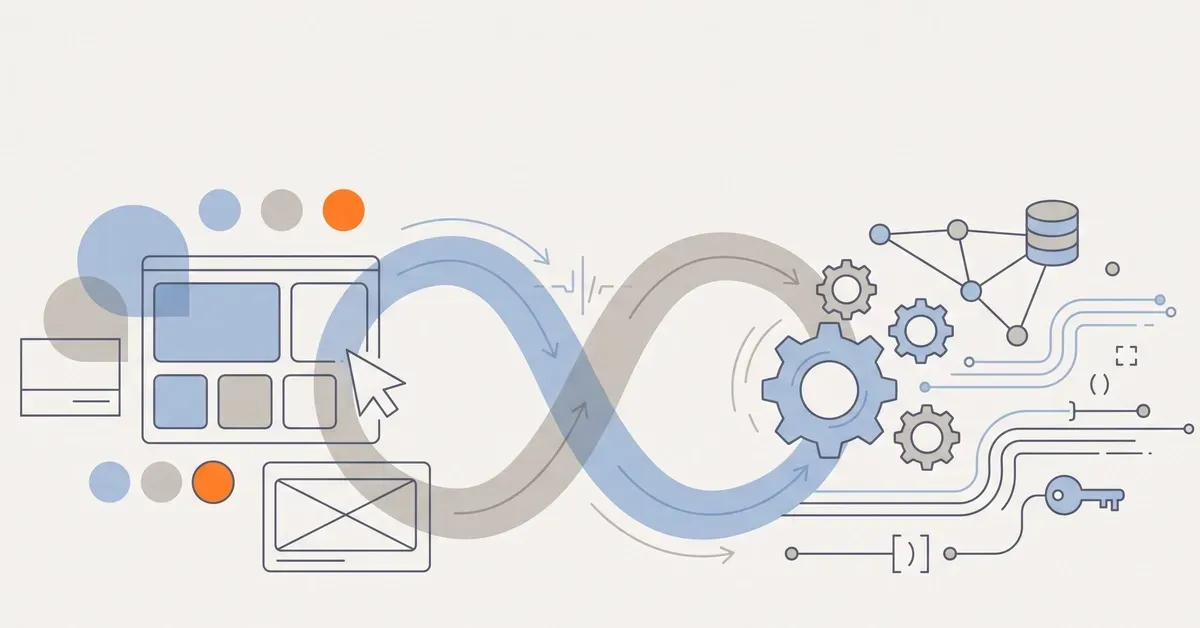
In the real world these two roles overlap constantly. A good designer thinks about how a layout will actually be built and whether it will load fast on a phone. A good developer respects the design instead of quietly "improving" it into something generic. On modern platforms, one experienced professional often covers both — which is exactly why the "designer or developer" question trips people up. The honest answer for most small businesses isn't one or the other. It's someone who understands both and knows which one your project actually calls for.
What Does a Website Designer Do?
A website designer decides what your visitor sees and how they move through it. That includes the layout of each page, the visual hierarchy that tells someone where to look first, the typography and color choices that make the site readable and on-brand, and the mobile presentation — because most of your visitors are on a phone, not a desktop.
The part people underestimate is that design is where conversion lives. A designer isn't just making things pretty; they're deciding whether the "Call Now" button is obvious or buried, whether the headline answers the visitor's question in three seconds, and whether the path from "landing on the page" to "contacting you" is short and clear. For a small business, that's the difference between a website that's a brochure and a website that's a lead source
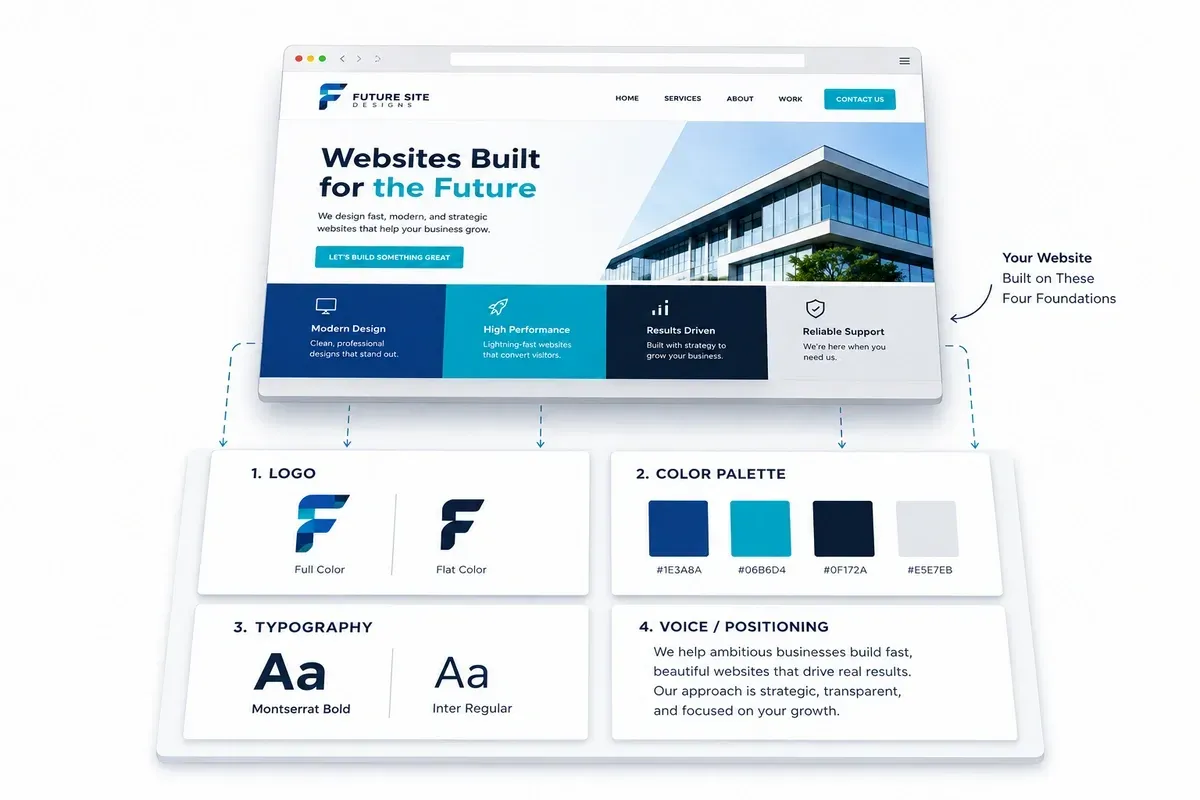
Design also depends on something that ideally exists before the design work starts: a consistent brand. Logos, colors, typography, and tone are the raw material a designer arranges. If those aren't settled, design decisions get made twice. That's a whole topic on its own — if you're at the very beginning, it's worth reading why getting your branding in order first usually saves money on the build.
What Does a Web Developer Do?
A web developer handles the machinery. In plain terms, they make the site <em>do things</em>: build custom functionality, connect your website to other software through integrations and APIs, work with databases when a site needs to store and retrieve information, add e-commerce capability, and keep the whole thing performing well.
Performance is the part that matters even when nothing looks "custom." How fast your pages load, how stable they are as they load, and how quickly a visitor can interact with them are measurable things Google pays attention to — its own Core Web Vitals guidance spells out exactly what it measures. A developer's decisions affect all of it.
Developers also own a big part of keeping a site safe. Platform updates, secure configuration, backups, and email authentication are development-side responsibilities, and getting them wrong is how sites get compromised. If security is a live concern for you, we wrote a separate guide on how a professional handles security, updates, and email protection.
Here's the reassuring part: most small business websites do not need heavy custom development. If your goal is a clean, fast, mobile-friendly site that generates leads, you are usually in "design plus solid build" territory, not "hire a software team" territory.
Do You Need a Website Designer, a Web Developer, or Both?
Skip the theory. Find your situation below.
You may only need a website designer if…
- Your site works but looks dated, cluttered, or off-brand.
- You're getting traffic but not enough calls, forms, or sales.
- You want a cleaner layout, better photos, and clearer messaging.
- You're on a solid platform and don't need new technical features — just a better experience on top of it.
You probably need a web developer if…
- You need a specific feature that isn't standard — a custom booking flow, a member login area, a calculator, or a connection to software you already use.
- You're pulling in data from another system (inventory, a CRM, scheduling) and it needs to sync.
- You have an existing site with a technical problem — it's broken, slow at the code level, or throwing errors.
- You're building something closer to a web application than a website.
You may need both if…
- You're starting fresh and want a site that both looks professional and does something specific.
- You're redesigning and adding functionality at the same time.
- Your project has a real technical requirement wrapped in a design that has to convert — which describes most serious small-business sites.
Notice how many businesses land in that last bucket in a small way: they mostly need design, plus one or two practical build details handled correctly. That's the norm, and it's why forcing yourself to pick a single job title can send you looking for the wrong person.
What Most Small Businesses Actually Need
Here's the plain truth after decades of building sites for small businesses: most owners don't need a software-development project. They need a professional website that works on phones, loads fast, ranks and gets found, turns visitors into leads, and can actually be maintained without calling in a specialist every time a phone number changes.
That's a "both, handled by one capable team" job, not a "designer versus developer" standoff. When the same professional owns the design and the practical build, you don't end up refereeing between two vendors who blame each other, you don't pay for a technical team you don't need, and you don't get a gorgeous site that can't do the one thing your business required. This is exactly why modern website platforms exist — they let an experienced professional deliver strong design and reliable functionality together, and reserve true custom development for the rare cases that genuinely need it.
None of that is a knock on specialists. Big, complex projects absolutely call for dedicated developers, and there are designers whose focus is worth every dollar. It's simply that the typical small-business website is best served by someone fluent in both, who can tell you honestly when your project is the exception.
What If I Need a Website Redesign?
A lot of people asking "designer or developer?" don't actually need either in the way they think — they need a redesign. If your site technically functions but looks like it was built a decade ago, doesn't convert, or loads slowly, that's usually a design-and-rebuild problem, not a ground-up custom-development problem.
A redesign keeps what works (your content, your domain, your basic structure) and replaces the experience: new layout, current design standards, faster performance, mobile-first presentation, and a clearer path to contacting you. It's typically faster and less expensive than people expect, because you're not reinventing the business — you're modernizing how it shows up online. If you're weighing a rebuild, it helps to know how long a website build typically takes so you can plan around it.
The mistake to avoid: assuming an outdated look means you need expensive custom development. Nine times out of ten, it means you need good design executed on a solid, well-maintained platform
Questions to Ask Before Hiring a Website Designer or Developer
Whoever you talk to, these questions cut through the sales language fast:
Who handles mobile optimization?
Most of your visitors are on phones. "We'll make it responsive" should be a given, not an upsell.
What platform will the website be built on, and why that one?
The answer tells you whether you'll be able to maintain it and what it'll cost long-term.
Who handles ongoing maintenance, updates, and backups after launch?
If nobody owns this, security and performance quietly decay.
Will I be able to make small edits myself?
Changing hours or a phone number shouldn't require a support ticket.
Does this include SEO-friendly structure?
A good-looking site that search engines can't read is a missed opportunity.
Can you handle both the design and the technical build, or do I need a second vendor?
This is the whole question in one line. Get a straight answer.
What happens if I need a custom feature later?
You want to know now whether your provider can grow with you.
If someone can't answer these plainly, that tells you something before any work begins.
How to Decide Who to Hire
A simple framework:
- Name the actual problem in one sentence. "My site looks outdated and doesn't get calls" is a design problem. "My site can't connect to my scheduling software" is a development problem. "I need a new site that looks great and books appointments" is both.
- If appearance, messaging, or conversion is the problem → start with design. Most small-business complaints live here.
- If specific functionality or a technical failure is the problem → development is on the table. Be precise about the feature; vagueness here gets expensive.
- If it's both — which is common — hire someone who does both. One accountable professional beats stitching two vendors together.
- Match the hire to the platform you'll live on. The right platform lets one capable team cover design and build, and keeps maintenance sane.
Read your own situation against that list and the answer is usually obvious within a sentence or two.
Where Future Site Designs Fits
Future Site Designs treats a website as a business tool, not a digital brochure. Founded by Jeromy Schall and building sites for small businesses since 1998, the studio covers both sides of this question — design that's built to convert and the practical, technical build that makes it work, load fast, and stay secure — so you're not left choosing between a pretty site and a functional one, or managing two vendors who don't talk to each other.
Most of our clients don't need a custom software team. They need a professional site that works on phones, gets found, and brings in leads, built on a platform they can actually maintain. That's the core of our
website design services, and it's shaped by
our experience doing this for Orlando and Central Florida businesses for nearly three decades. When a project genuinely needs deeper custom development, we'll tell you plainly — and when it doesn't, we won't sell you one.
Frequently Asked Questions
Is a web designer the same as a web developer?
No. A web designer focuses on how a site looks, feels, and converts — layout, branding, and user experience. A web developer focuses on how it works — code, functionality, and integrations. Some professionals do both, but the roles are distinct.
Do I need both a web designer and a web developer?
Sometimes, but not always. If you mainly need a better-looking, better-converting site, design may be enough. If you need custom functionality or system integrations, development comes in too. Many small businesses are best served by one professional who handles both.
Can one person do both design and development?
Yes. Plenty of experienced professionals and small studios handle design and the practical build together, especially on modern platforms. For most small-business websites, that's simpler and more accountable than hiring two separate vendors.
Do I need a web developer for a small business website?
Usually not a dedicated one. A typical small-business site — professional design, mobile-friendly, fast, lead-generating — is well within "design plus solid build." You'd bring in heavier development for custom features or connections to other software.
How much does it cost to hire a website designer versus a web developer?
It depends on scope, not job title. Design-focused work is generally more predictable in price; custom development costs more because it's built to spec. Rather than compare titles, compare what the project requires — then ask each provider what's included.
What's the difference between web design and web development?
Web design is the visual and experience layer — what visitors see and how they move through the site. Web development is the technical layer — the code and functionality that make it run. Design decides how it looks and guides; development decides how it works.
Should I hire a freelancer or an agency?
Either can work — the real question is whether they can cover both the design and the technical build, and who handles maintenance after launch. A single freelancer who does both, or a small studio, is often the right fit for a small business.
Ready to Figure Out Which One You Need?
The right professional depends entirely on what your website needs to do — and often the honest answer is "design, plus a few technical things done right," handled by one team. If you're not sure which camp your project falls into, that's a five-minute conversation, not a commitment.
Tell us what you're trying to fix or build, and we'll tell you straight what it actually calls for. Explore our
website design services or reach out to Future Site Designs at
407-720-8540 — no pressure, just a clear answer.
The body content of your post goes here. To edit this text, click on it and delete this default text and start typing your own or paste your own from a different source.
The body content of your post goes here. To edit this text, click on it and delete this default text and start typing your own or paste your own from a different source.
Future Site Designs Knowledge Center



About the Author: Jeromy Schall
Jeromy Schall is the CEO, Founder, and Customer Manager of Future Site Designs, a digital marketing and web development agency he founded in Orlando in 1998. He specializes in the intersection of technical engineering and sales-driven architecture.
Digital Strategist and Founder of Future Site Designs, Est. 1998
Having navigated nearly three decades of digital evolution, Jeromy shares practical guidance for businesses scaling in the 2026 landscape. As a frequent contributor to the Future Site Designs Knowledge Center, he writes about AI-driven SEO, answer engine optimization (AEO), and mobile-first design.
Customer Management and Sales Leadership
In his role as Customer Manager, Jeromy provides high-level strategic leadership to the agency's sales and operational divisions. He is responsible for supervising customer engagement teams and ensuring that every project is engineered to meet rigorous sales targets and operational growth benchmarks.
AI-Driven SEO and Web Engineering
His expertise is centered on creating intelligent digital ecosystems that are secure, lightning-fast, and optimized for generative search engines like Perplexity and Gemini. His leadership keeps Future Site Designs focused on white-label development and conversion-focused web architecture.
Waterski Broadcasting and Media Production
Beyond his leadership at Future Site Designs, Jeromy works in broadcasting and media production for waterski world championships. That hands-on media production experience adds a real-world perspective that is unusual in the digital agency space.